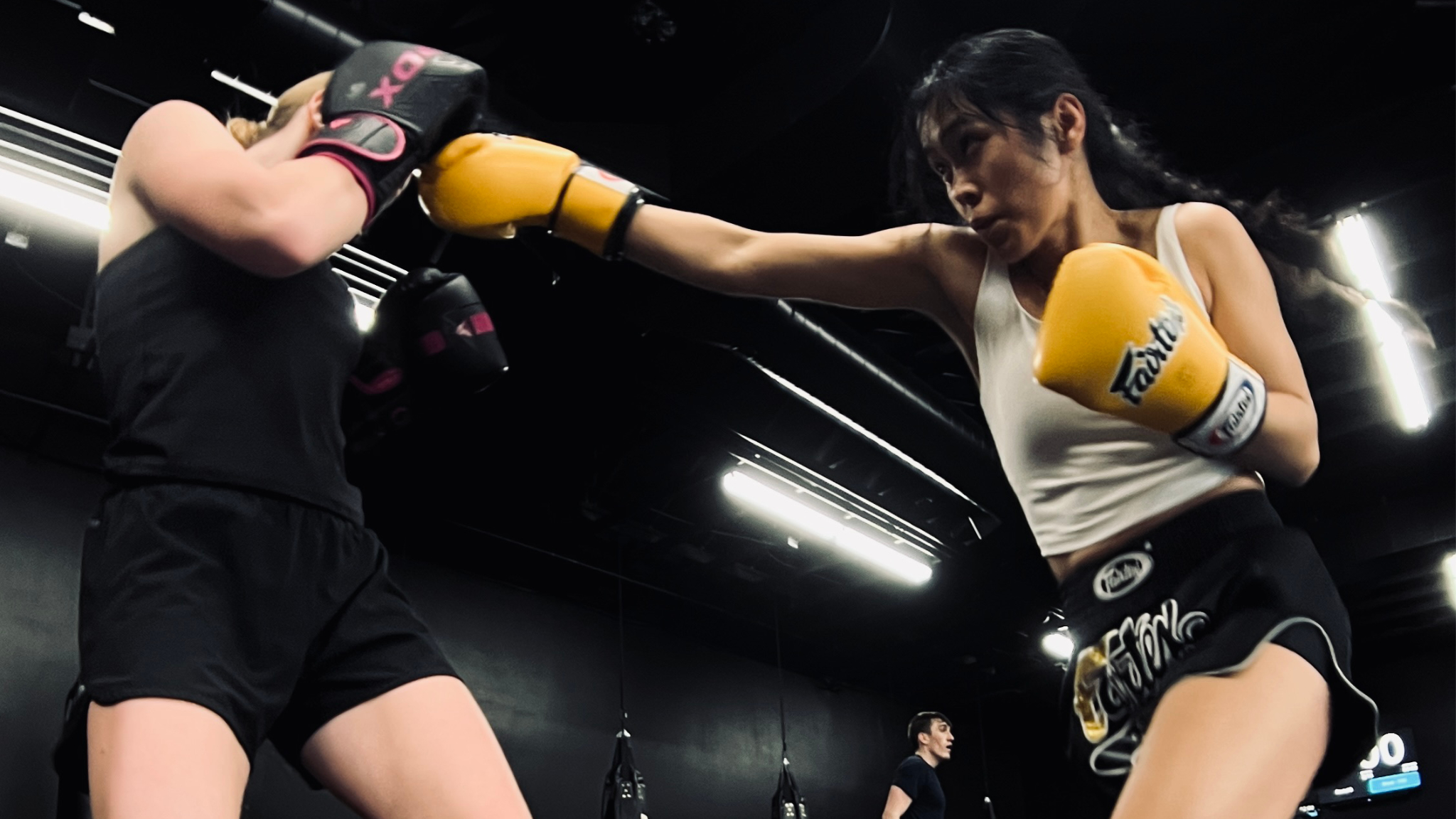
Walk into almost any martial arts gym in the Treasure Valley and you’ll probably find Muay Thai on the schedule.
Real competitive Kickboxing; not cardio kickboxing or fitness kickboxing – not so much.
That surprises a lot of people because kickboxing is one of the most exciting combat sports in the world. Organizations like K-1, GLORY, RISE, RIZIN, and ONE Championship showcase lightning-fast combinations, spectacular knockouts, incredible athleticism, and some of the most technical strikers on the planet.
So why isn’t every gym teaching it?
When comparing Muay Thai vs. Kickboxing, most people assume they’re nearly identical. In reality, they’re two very different martial arts. They share many techniques, they’ve influenced one another for decades, but they reward very different styles of striking and create two very different training experiences.
Shared Destination. Different Paths.
Kickboxing didn’t develop in isolation.
Its roots trace back to traditional karate and Western boxing. As the sport evolved, coaches and competitors adopted effective techniques from other striking arts; including Muay Thai – creating the modern version of kickboxing seen around the world today.
Organizations like K-1, GLORY, RISE, RIZIN, and ONE Championship continue pushing the sport forward, constantly raising the bar for speed, technique, athleticism, and creativity.
Muay Thai followed its own path.
Developed in Thailand, Muay Thai became known for its emphasis on punches, kicks, knees, elbows, and clinch fighting. It remains one of the most respected striking arts in the world and has had a tremendous influence on combat sports as a whole.
Although the two arts share many techniques, they emphasize those techniques in very different ways.
The Biggest Difference Between Muay Thai and Kickboxing
Ask someone who’s never trained before what separates Kickboxing from Muay Thai and they’ll probably answer:
“Elbows.”
In reality, elbows are certainly one difference, they’re far from the biggest.
The biggest difference is how each art approaches striking.
Traditional Muay Thai emphasizes balance, posture, timing, and efficiency. Training often revolves around refining shorter, repeatable combinations through thousands of repetitions until every movement becomes instinctive.
Instead, Kickboxing approaches striking from a different angle.
Movement is constant.
Rhythm changes.
Angles appear and disappear.
Instead of repeating the same combinations over and over, kickboxing encourages students to build combinations, change targets, change tempo, create angles, and solve problems in real time.
The result is a style that’s incredibly rewarding to learn because there’s always another level. Another combination. Another setup. Another angle. Even after years of training, you’re still discovering new ways to solve the same problem.
Why So Many People Love Kickboxing
Ask almost anyone who’s trained kickboxing for several years why they keep coming back, and you’ll rarely hear,
“Because it’s a good workout.”
The workout is just a bonus.
What keeps people hooked is the endless opportunity to improve.
Muay Thai tends to build around shorter, repeatable combinations.
Kickboxing becomes much more free-flowing.
Longer combinations.
Different rhythms – Different targets – Different angles.
One exchange can branch into countless possibilities depending on what your opponent gives you.
Every opponent presents a different puzzle – Every round becomes another opportunity to solve it.
That’s what makes kickboxing so much fun.
It’s not just about throwing punches and kicks.
It’s about learning how to put everything together.
Different Rules Create Different Fighters
Ultimately, every combat sport rewards certain habits.
Change the rules, and the sport changes with them.
Muay Thai rewards success in the clinch, powerful knees, elbows, and controlling an opponent at close range.
Kickboxing places a greater emphasis on continuous striking, footwork, movement, angle creation, timing, and combination fighting.
Neither sport is trying to become the other.
They’re simply built around different objectives.
Why Kickboxing Fits Modern MMA So Well
Mixed Martial Arts changed striking forever.
Once wrestling, takedowns, and cage fighting became part of the equation, every striking style had to evolve.
A stance that works well under one ruleset doesn’t always work well under another.
Standing tall with most of your weight on the rear leg makes defending level changes and takedowns much more difficult. MMA demanded more movement, better footwork, better angles, and a stance that could defend both strikes and takedowns without sacrificing offense.
Those qualities have always been central to kickboxing.
That’s one of the reasons kickboxing has become such a valuable foundation for modern MMA. The footwork, mobility, timing, stance, and combination work transition naturally into an environment where fighters must defend punches, kicks, takedowns, and submissions at any moment.
Modern MMA became its own sport.
Kickboxing evolved with it.
Sport Kickboxing Isn’t the Same as Fitness Kickboxing
One thing worth clearing up is that not all kickboxing classes are the same.
Many health clubs and fitness centers offer kickboxing-inspired workouts designed primarily for cardio.
Those classes can be a great workout.
They’re just not teaching the sport of kickboxing.
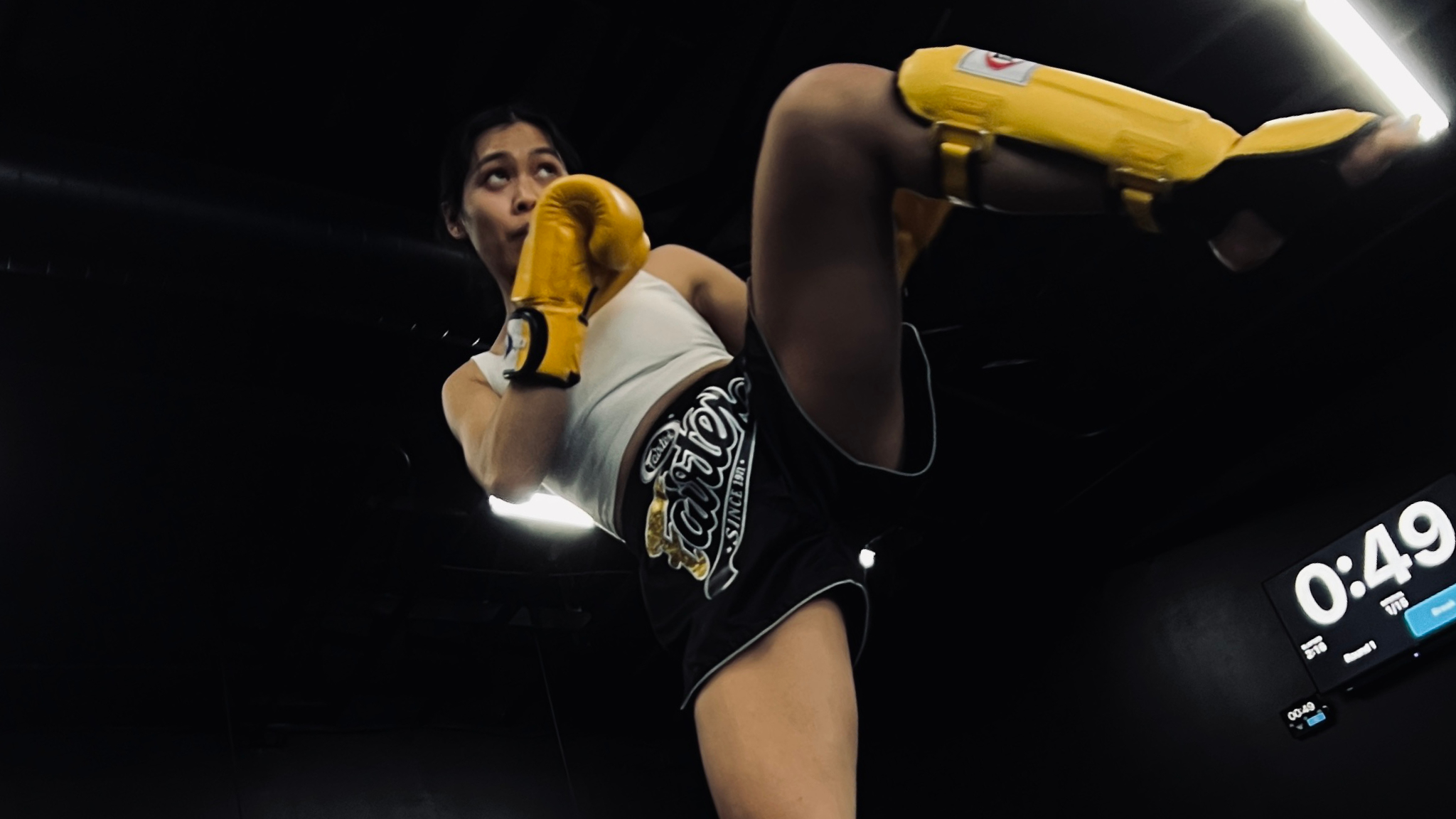
At Boise Combat Sports, kickboxing is taught as a legitimate combat sport. Students learn authentic kickboxing skills through structured instruction, technical pad work, partner drills, footwork, combinations, timing, defense, and controlled sparring as they progress.
It’s real kickboxing – not cardio kickboxing.
The BCS Striking System
The BCS Striking System is heavily rooted in K-1 style kickboxing with a strong foundation in Kyokushin Karate. It is based on decades of training and competition under K-1 rules and full-contact Karate in both the United States and Japan.
Every class builds upon the last.
Students develop timing.
Distance.
Footwork.
Balance.
Defense.
Pressure.
Ring awareness.
Each lesson is part of a structured curriculum designed to develop complete strikers – not simply students who know a collection of techniques.
Experience the Difference
Reading about kickboxing is one thing.
Feeling your first clean combination land on the pads is something else entirely.
The first time your footwork clicks.
The first time a combination flows without thinking.
The first time timing replaces hesitation.
That’s when everything starts making sense.
If you’ve been searching for Kickboxing in Boise, and you’re looking for authentic instruction in a welcoming, professional environment, we’d love to meet you.
Wrap your hands.
Put on a pair of gloves.
Experience real competitive kickboxing.