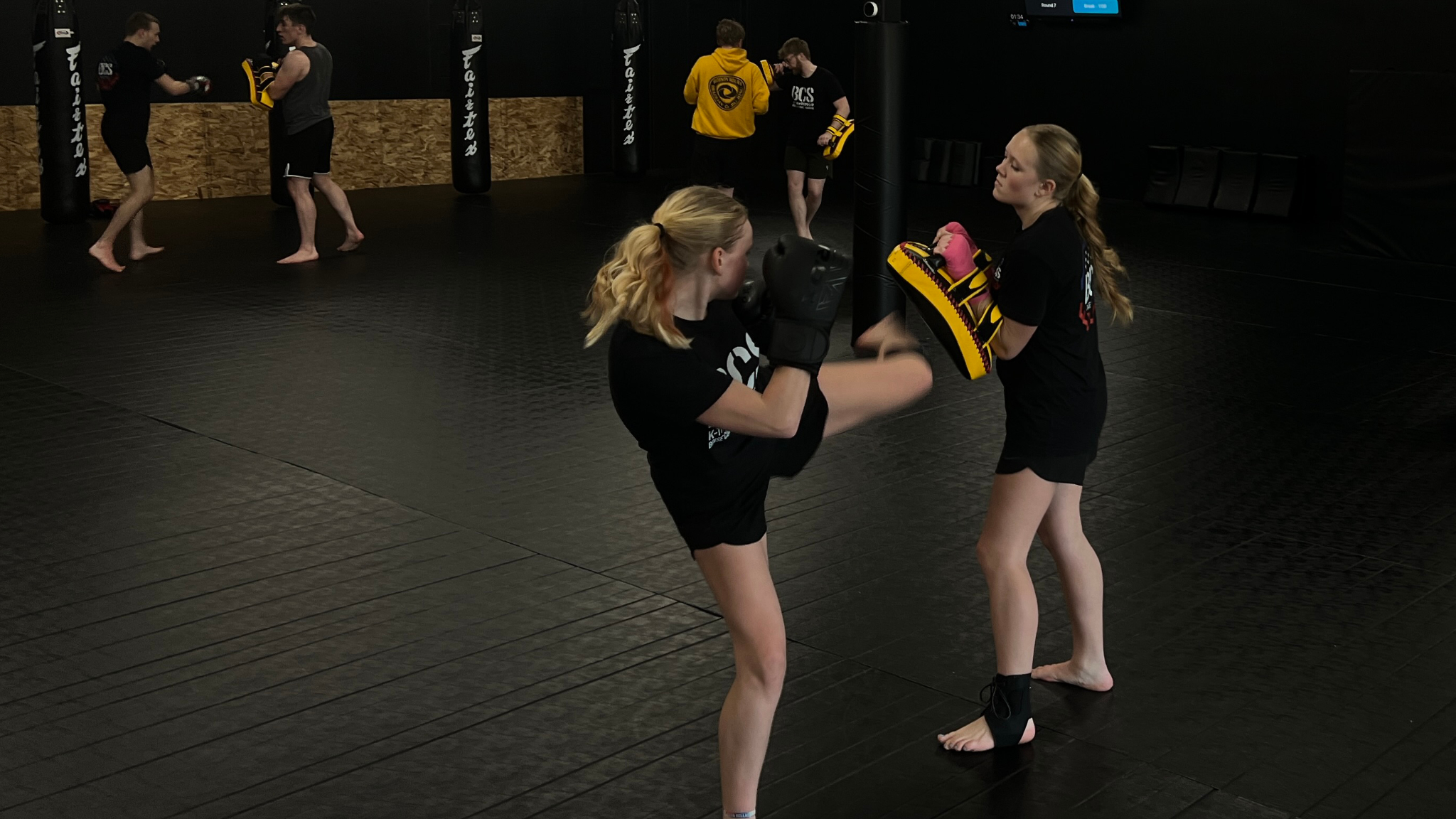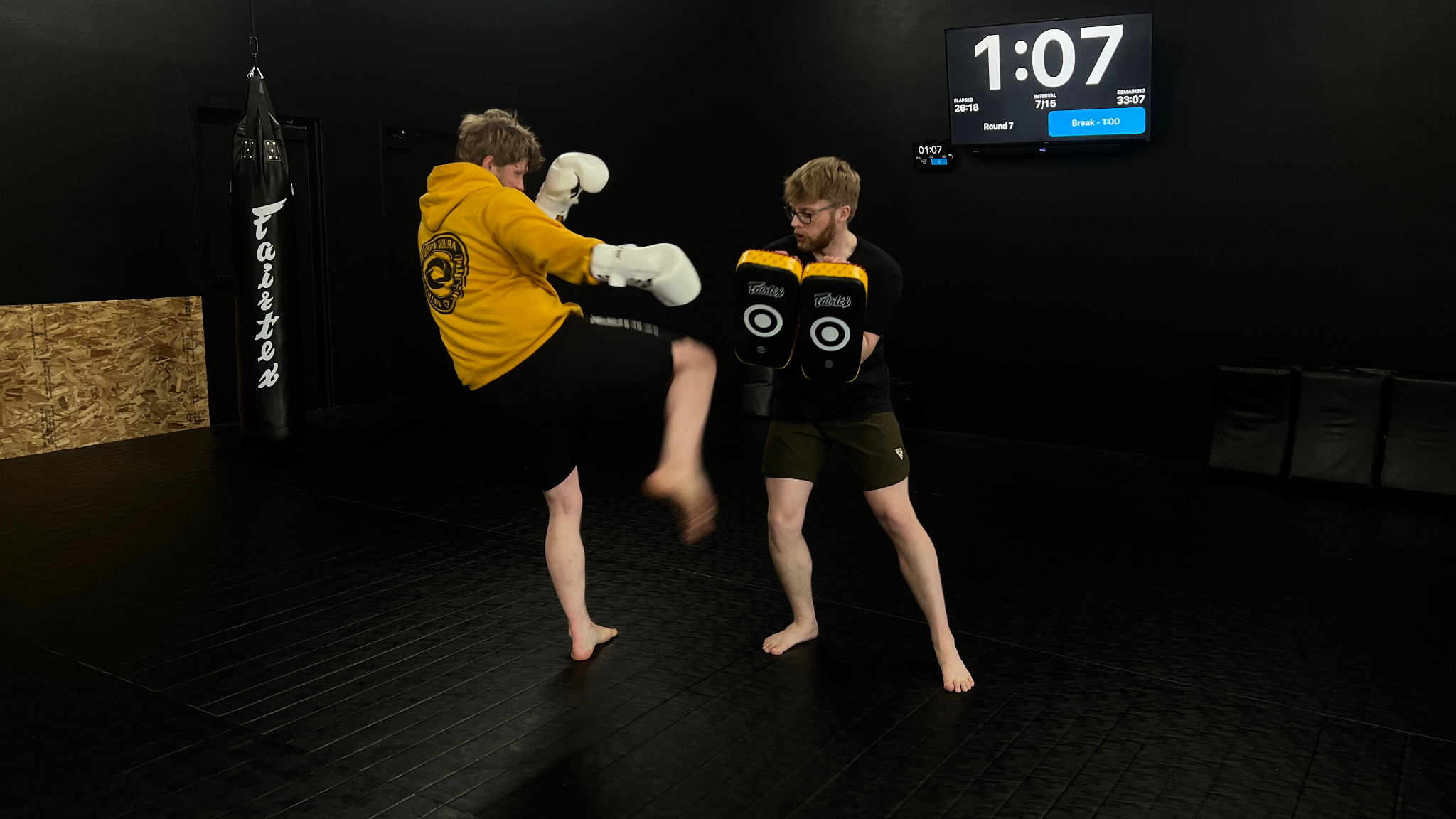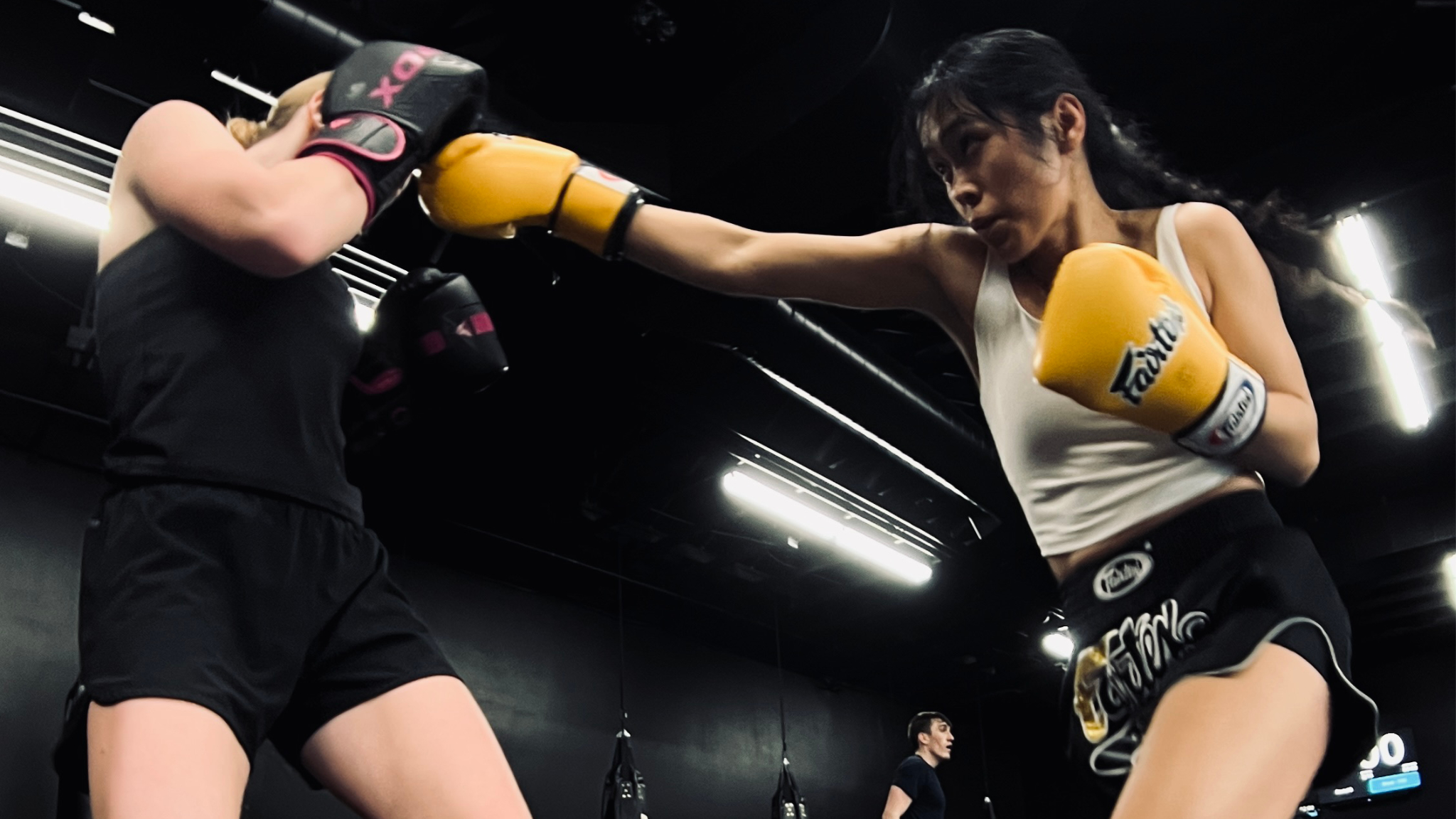
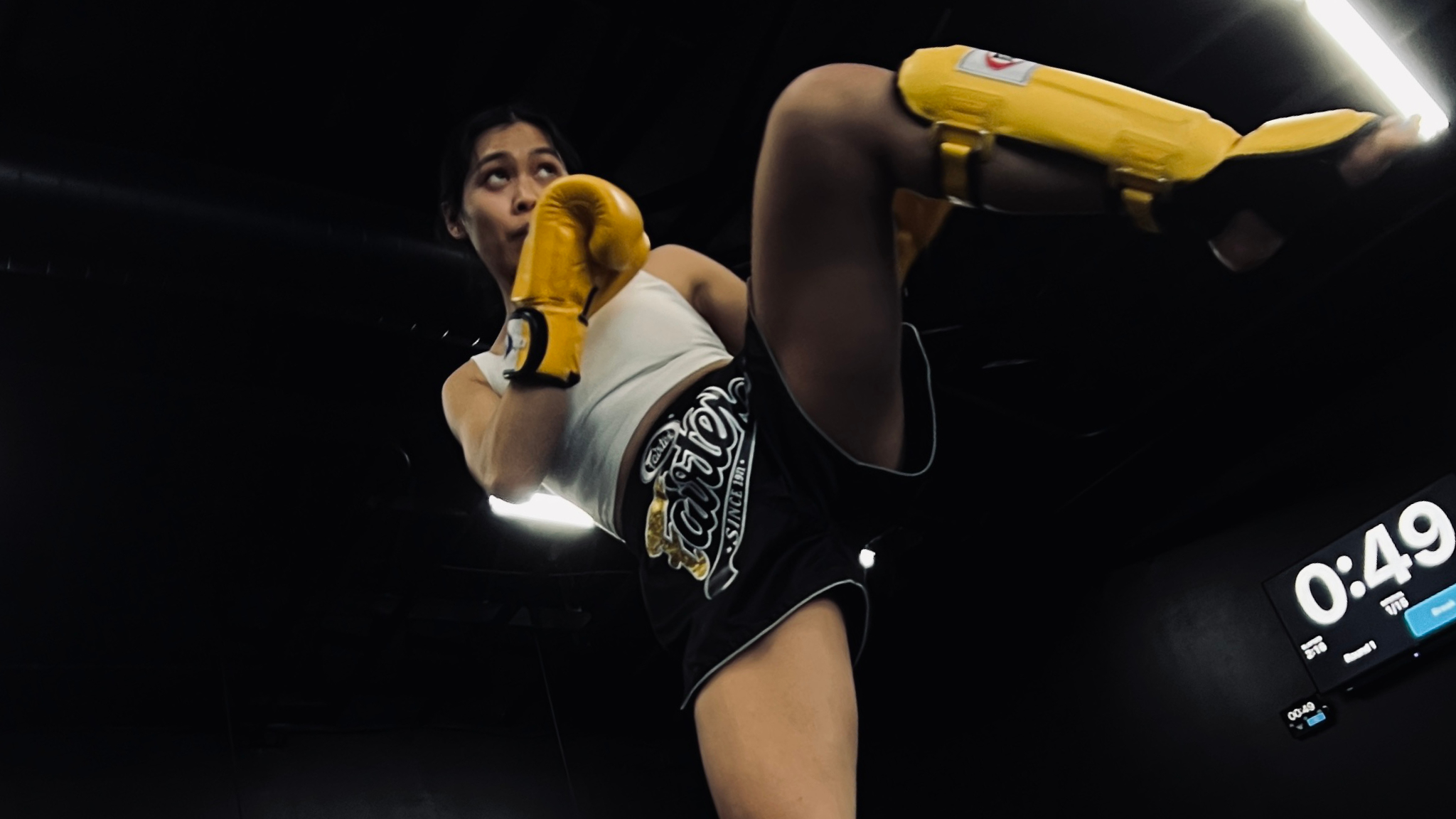
Training has just started, Coach shouts “break out for Shadowboxing”.
Immediately the room comes to life as students begin moving round the mats, throwing punches and kicks, slipping imaginary punches, checking and blocking invisible kicks, circling, evading, blitzing, throwing furious combinations……at nothing at all……
There you are, feeling awkward, embarrassed, terrified you’re being judged – that you look silly, that you’re doing it all wrong.
That’s completely normal.
Every experienced kickboxer has been there. The difference is they didn’t avoid shadowboxing – they embraced it. Over time, they realized it wasn’t just a warm-up. It became one of the most valuable drills in their training.
What Is Shadowboxing?
Shadowboxing is practicing your techniques against an imaginary opponent. There isn’t a heavy bag absorbing your mistakes or a partner reacting to your attacks. Your attention shifts to the details that actually make someone a better striker: stance, balance, footwork, posture, hand position, timing, and technique.
If you have a Karate or TaeKwonDo background, think of shadowboxing as the Kickboxer’s version of kata/poomsae. While the two are very different in execution, they serve a similar purpose. Kata develops the fundamentals of Karate through repetition. Shadowboxing develops the fundamentals of kickboxing the same way. This is where you build balance, refine your stance, learn to keep your hands where they belong, and develop the muscle memory that carries over into pad work, heavy bag training, sparring, and competition.
A lot of beginners think shadowboxing is about throwing as many punches as possible, and they couldn’t be more wrong. The goal is learning to move correctly. Every repetition teaches your body where your hands belong, how your feet should move, and how to stay balanced before, during, and after every technique. These details matter far more than simply hitting a pad.
Don’t Fight the Air – Fight an Opponent
Throwing combinations into empty space without a purpose is one of the most common mistakes beginners make. You need to actually envision someone standing directly in front of you.
See their head, see their hands, see how they’re moving towards you or circling away from you. When you jab, see it landing. When you kick, see exactly where it connects – follow with a hook and picture your opponent slipping underneath it or firing a counter.
Now you’re reacting instead of pretending.
Good shadowboxing isn’t random movement. It’s solving problems. Every strike should have a target, every combination should have a purpose, and every movement should prepare you for what happens next.
Slow Down Before You Speed Up
Speed is one of the biggest misconceptions in Kickboxing. Timing beats speed – EVERY TIME.
Rookie students believe moving faster means they’re improving faster. That’s simply FALSE. Hands stop returning to the face, the stance narrows, balance disappears, and techniques become sloppy.
Watch experienced fighters shadowbox and you’ll notice something surprising. They aren’t rushing. They’re paying attention to details because perfect repetitions create good habits, and good habits eventually become speed.
Master the movement first. The speed will come.
You’re stopping before you’re finished
Here’s a simple coaching cue you can use every time you shadowbox:
Never admire your work.
Too many beginners throw a combination, stop moving, drop their hands, and mentally reset. Unfortunately, that’s also the moment a real opponent would hit you.
Build this habit instead:
Throw your combination. Move your feet. Bring your hands back to your face. Imagine your opponent countering. Defend. Reset.
The exchange isn’t over just because you finished punching.
Check Yo’self
Every few combinations, stop thinking about offense and check your fundamentals.
Is your chin tucked? Are your hands returning to your guard? Are your shoulders relaxed? Did you land back in your stance after kicking? Are your feet crossing when you move?
Every “no” is something you can improve. That’s the real value of shadowboxing – it exposes mistakes before they become habits.
Don’t do it till you get it right, do it till you can’t get it wrong
Social media is full of spinning attacks, flashy combinations, and techniques that look incredible on camera. They’re entertaining to watch, but they shouldn’t become the foundation of your training.
The best kickboxers in the world still spend countless rounds sharpening jabs, crosses, hooks, low kicks, footwork, and defensive movement. The basics don’t become less important as you improve – they become more important.
Anyone can hit a heavy bag hard.
Maintaining perfect stance, balance, posture, and hand position while moving freely is much harder. That’s what shadowboxing develops, and it’s why every serious striker continues doing it long after they become experienced.
You Don’t Need Equipment
One of the greatest benefits of shadowboxing is that you can do it almost anywhere.
You don’t need gloves, focus mitts, or a heavy bag. You don’t need even need a training partner.
All you need is a few feet of space and DISCIPLINE.
Five or ten focused minutes at home every day will usually produce better results than one long session once a week. Those small improvements compound over time and often separate the students who improve quickly from those who plateau.
Keep it simple ….
Round 1: Focus only on movement. Stay in your stance, move in every direction, and stay balanced.
Round 2: Single techniques only. Work on returning to your guard after every punch and landing back in your stance after every kick.
Round 3: Put it together. Throw simple combinations, imagine your opponent reacting, defend after every exchange, and keep moving.
The goal is to build good habits not instagram reels.
Final Thoughts
Shadowboxing isn’t exciting because there isn’t a loud impact or a heavy bag swinging across the room. It doesn’t always leave you exhausted, and it probably won’t impress anyone watching from the sidelines.
What it does build are the habits every good Kickboxer depends on: better balance, cleaner footwork, sharper technique, stronger defensive awareness, and more efficient movement. Those skills carry over into every part of your training.
Don’t wait until your next class to practice. Spend a few minutes shadowboxing every day, focus on quality instead of speed, and treat every round like you’re facing a real opponent.
If you’re looking for kickboxing classes in Boise, Meridian, Kuna, or Nampa, we’d love to help you build those fundamentals the right way. Whether your goal is fitness, self-defense, or competition, every great kickboxer starts with the same foundation; and shadowboxing is one of the best places to begin.